

The AC charging pile enclosure serves as the primary structural and protective housing for residential and commercial AC charging piles. Acting as the mounting platform and safety shell for all electrical components, control modules, and communication units, it is the most fundamental and critical structural component of the system. Unlike standard electrical cabinets, these enclosures are specifically designed for 220V low-voltage AC charging scenarios for new energy vehicles. They integrate multiple functions—including structural support, environmental protection, heat dissipation and ventilation, electrical isolation, security against theft, and support for human-machine interfaces. Key characteristics include high weather resistance, robust protection, impact resistance, and flame-retardant insulation. Capable of stable, long-term performance under complex indoor and outdoor conditions, the enclosure directly determines the operational safety, service life, and environmental adaptability of the charging pile. It is widely used in residential parking spaces, commercial parking lots, public charging stations, industrial parks, and scenic area service zones.
I. Core Definition and Design Positioning
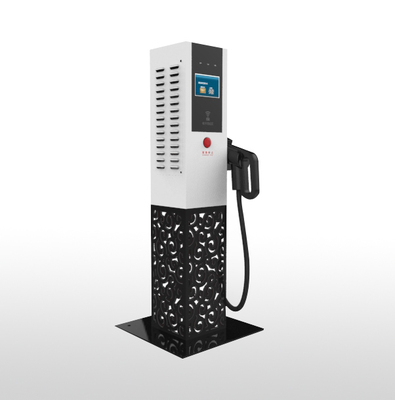
The AC charging pile enclosure is a specialized sheet-metal protective cabinet designed to accommodate mainstream AC charging power ratings such as 7kW, 11kW, and 21kW. It houses core components—including circuit breakers, residual current devices (RCDs), lightning protection modules, main control boards, metering modules, communication units, and terminal blocks—providing structural support and comprehensive safety protection for the entire unit. Its operational principle involves using an enclosed structure to shield against external dust, rain, moisture, and physical impacts; utilizing specialized ventilation and heat dissipation designs to regulate operating temperatures; and employing insulating, flame-retardant materials to eliminate electrical hazards, thereby ensuring stable, long-term, unattended operation.
The enclosure's design focuses on five core metrics: safety protection, weather resistance and durability, structural integrity, ease of installation, and smart integration. It overcomes the shortcomings of standard distribution boxes—such as low protection ratings, susceptibility to corrosion, poor heat dissipation, and weak impact resistance. By strictly adhering to national design standards for new energy charging piles, it balances adaptability to extreme outdoor environments, compliance with electrical safety regulations, and the aesthetic appeal required for commercial equipment, serving as the structural foundation for the safe, stable, and long-lasting operation of AC charging piles.
II. Mainstream Materials and Performance Characteristics
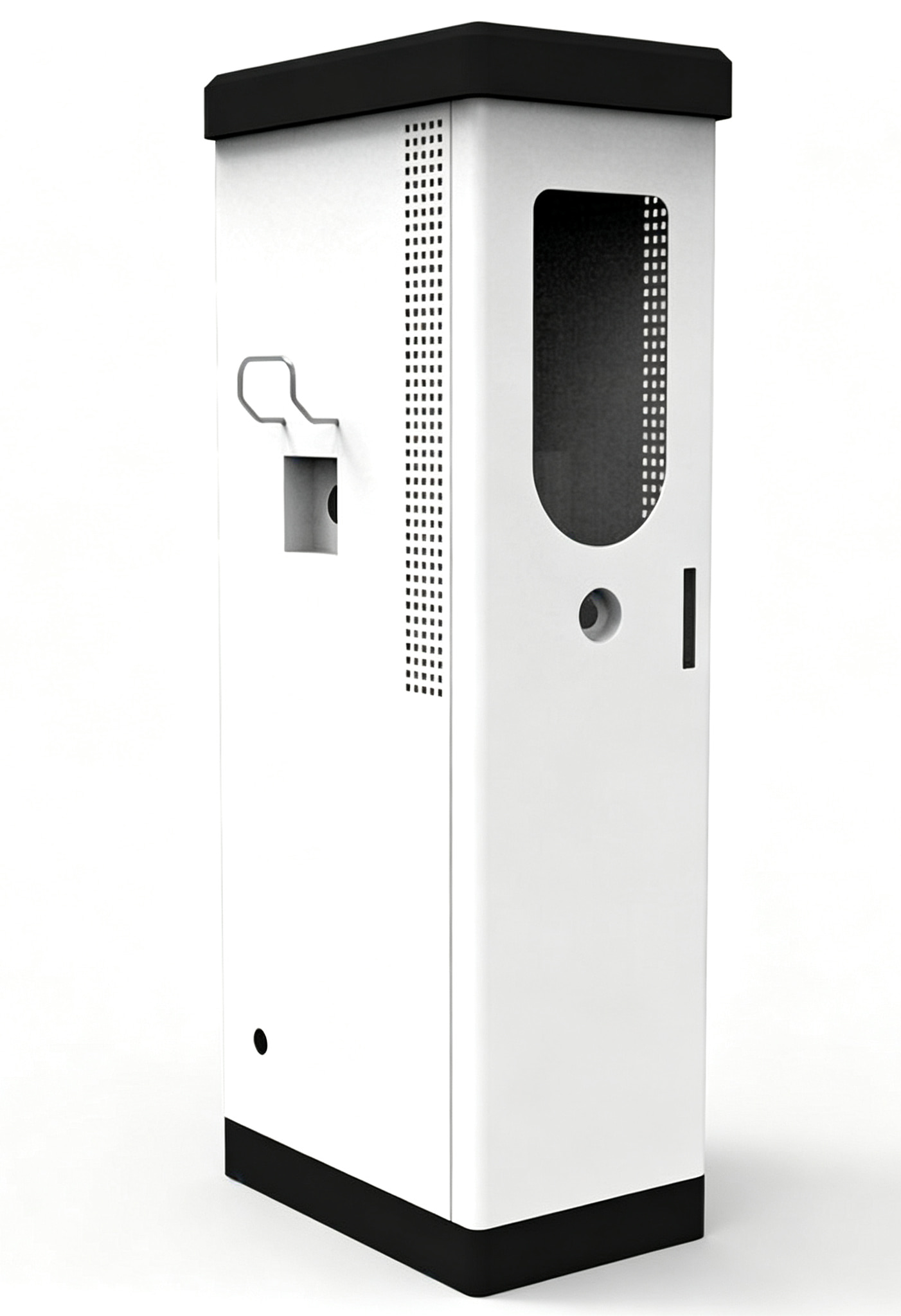
The material of the AC charging station enclosure directly determines the equipment's protective performance, weather resistance, and service life. Mainstream industry materials fall into three categories, each suited for residential, commercial, or harsh outdoor environments; after undergoing anti-corrosion, flame-retardant, and reinforcement treatments, they can meet long-term service requirements of over 10 years.
1. Cold-rolled Steel + Electrostatic Powder Coating (Commercial Standard)
This is the most widely used mainstream material in the industry. It utilizes thickened, high-quality cold-rolled steel formed through integrated bending, offering robust structural rigidity, impact resistance, and resistance to deformation. The surface undergoes degreasing, pickling, phosphating, and high-temperature curing of the electrostatic powder coating, resulting in strong adhesion and scratch resistance, as well as excellent dustproof, waterproof, anti-oxidation, and anti-aging properties. With an overall protection rating of up to IP54, it is suitable for high-frequency usage scenarios such as outdoor parking lots and public charging stations. Offering a great balance of cost-effectiveness and structural stability, it is the preferred material for 7kW and 21kW commercial AC charging stations.
2. 304 Stainless Steel (Preferred for Harsh Outdoor Environments)
Made from food-grade 304 stainless steel, this material offers corrosion, rust, and salt-spray resistance far superior to ordinary steel, making it perfectly suited for harsh outdoor conditions such as coastal, rainy, highly humid, or dusty environments. The material features high strength, impact resistance, and tolerance to extreme temperatures; it does not suffer from rust, peeling, or deformation even with prolonged exposure to sun and rain. It boasts a service life of over 15 years with minimal maintenance and is commonly used in high-end residential complexes, coastal areas, and open-air public charging stations.
3. PC+ASA Polymer Alloy (Lightweight Residential Model)
A novel engineering plastic material that combines the high strength of PC (polycarbonate) with the weather resistance of ASA (acrylonitrile styrene acrylate). It offers a lightweight design, excellent insulation properties, and no risk of electrical conductivity. It also features a high flame-retardant rating, effectively eliminating safety hazards related to current leakage or electric shock. The material is UV-resistant, anti-aging, and resistant to yellowing or cracking, offering excellent waterproofing and dustproofing. It features an attractive design, ease of installation, and cost-effectiveness, making it ideal for residential wall-mounted AC charging boxes and compact private parking charging piles in indoor garages or enclosed parking spaces.
III. Overall Structure and Core Component Design
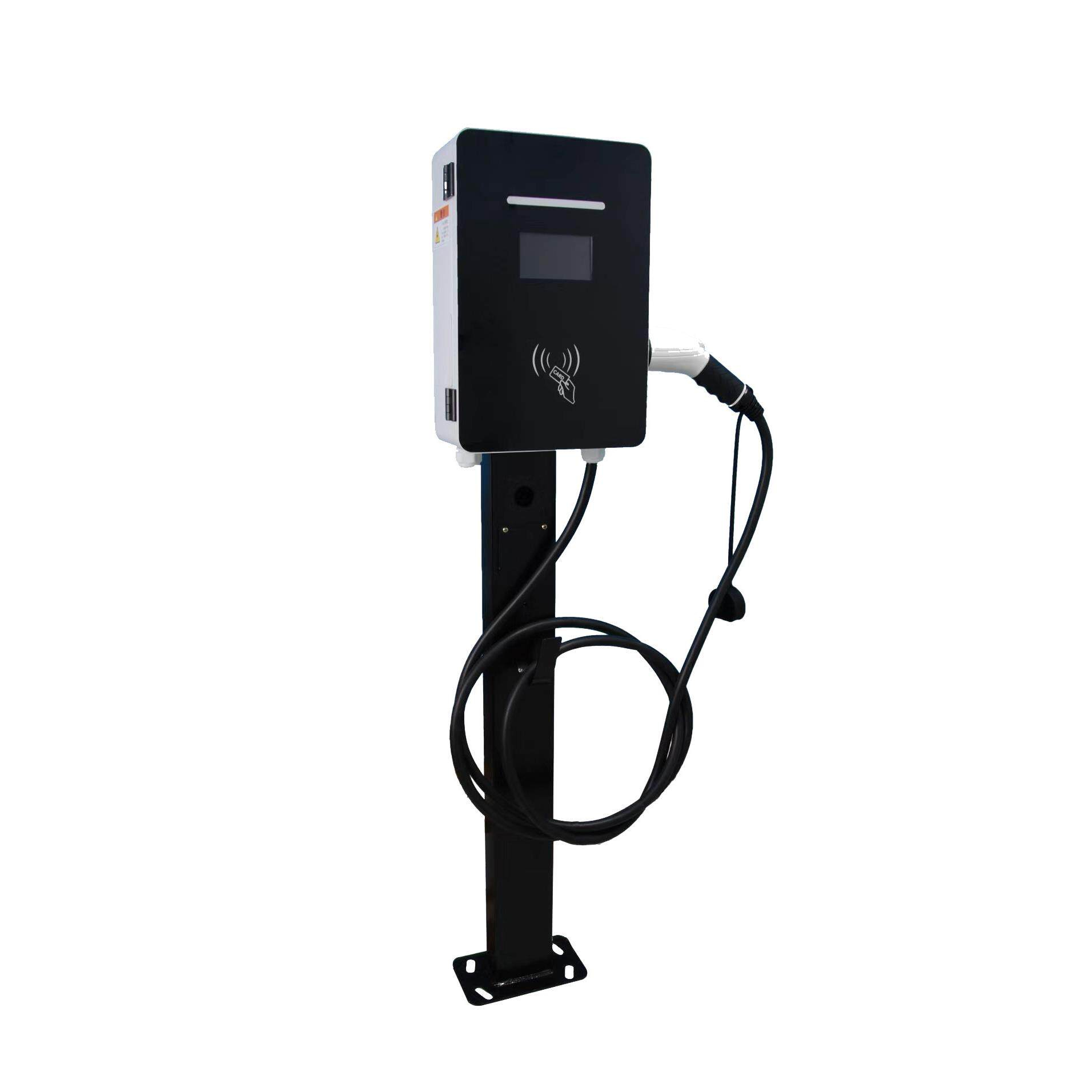
The AC charging pile enclosure utilizes a modular, layered structural design with an organized layout and distinct zoning. This ensures the separation of high- and low-voltage circuits, smooth heat dissipation, standardized wiring, and convenient operation and maintenance. The enclosure comprises six core structural elements that work in concert to ensure stable equipment operation.
1. Main Cabinet Frame
This serves as the enclosure's primary load-bearing structure. Formed via integrated bending, it features a seamless, robust design that distributes weight evenly and resists deformation. It is available in two configurations: wall-mounted (compact and space-saving, suitable for indoor parking) and pedestal-mounted (featuring a reinforced base for stability, wind resistance, and tip-over protection, suitable for outdoor environments). Standardized mounting slots and fixing holes are pre-configured inside the cabinet to facilitate the organized installation of various electrical modules.
2. Sealing and Protection Structure
The unit is equipped with high-density waterproof and dustproof sealing strips, an integrated rain canopy, and a staggered diversion channel design. Combined with a fully sealed door panel, these features effectively prevent the ingress of rain, mist, and dust. The door panel fits seamlessly when closed, eliminating issues such as condensation and moisture accumulation from dust; this structural integrity keeps internal electrical components dry and clean, preventing short circuits and leakage faults while reliably achieving an IP54 or higher protection rating.
3. Heat Dissipation and Ventilation System
The system employs Z-shaped louvered vents and vertical convection air ducts to facilitate natural air cooling, eliminating the need for auxiliary fans; this results in low noise, maintenance-free operation, and resistance to dust accumulation. Precisely matched to the thermal characteristics of the charging pile's electrical components, the system rapidly dissipates heat generated by the main control board, relays, and wiring. This prevents excessive internal heat buildup—which could otherwise lead to power derating, thermal protection shutdowns, or accelerated component aging—and ensures reliable operation across a wide temperature range of -30°C to 50°C.
4. Human-Machine Interaction and Lock Control Structure
The front panel features designated mounting spaces for a touchscreen, card reader, QR code scanner, and status indicators, supporting smart charging interaction. It is equipped with a specialized anti-theft mechanical lock that fits tightly—offering pry-resistant and tamper-proof security—to effectively prevent unauthorized access, accidental operation, or malicious vandalism, thereby ensuring operational safety and orderly site maintenance. Select high-end models feature smart electronic locks that support remote management.
5. Insulation and Partitioning Structure
The interior is equipped with insulating partitions and barriers separating high-voltage/high-power circuits from low-voltage control circuits. This strict separation prevents electromagnetic interference and signal crosstalk while eliminating exposure to live components, thereby enhancing the equipment's insulation and protective capabilities. Internal cable channels and mounting clips ensure neat, orderly, and compliant wiring that meets installation standards for new energy electrical equipment.
6. Waterproof Cable Entry and Grounding Structure
The base is fitted with waterproof cable glands and sealed cable entry points, ensuring a tight seal that prevents rainwater or moisture from seeping into the enclosure along the cables. A dedicated grounding terminal ensures reliable equipment grounding, effectively dissipating leakage current and static electricity to mitigate electric shock risks—a critical feature for electrical safety.
IV. Core Functional Advantages
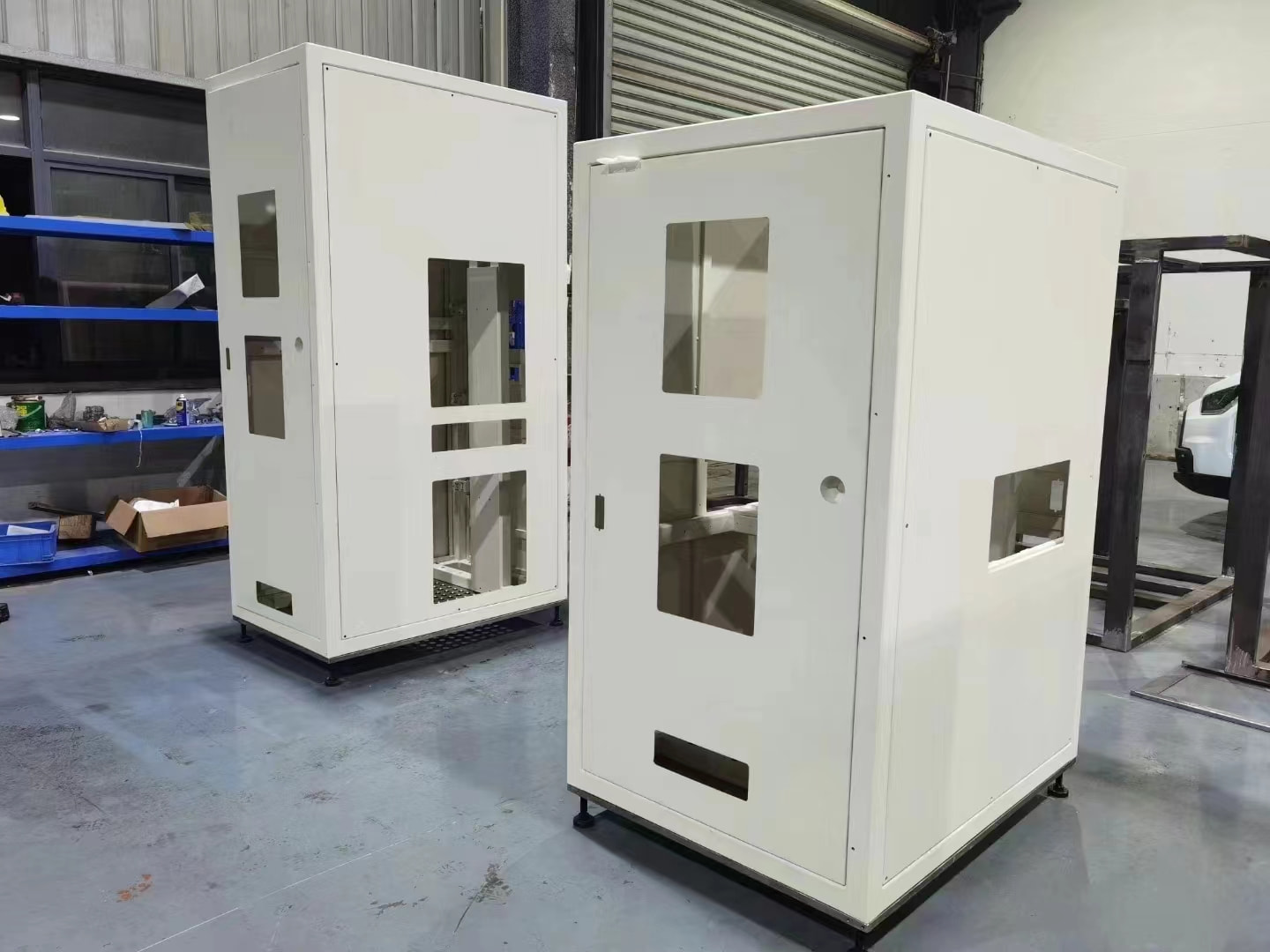
1. Comprehensive Safety Protection to Eliminate Electrical Hazards
Leveraging a high-protection-rating structure, flame-retardant insulating materials, and a sealed, waterproof design, the unit provides multi-layered protection against dust, water, moisture, lightning, fire, electric shock, and tampering/theft. The partitioned layout for high- and low-voltage circuits eliminates risks of electromagnetic interference and short circuits, while a reliable grounding structure ensures protection against current leakage. This comprehensive approach mitigates electrical safety hazards in public charging scenarios, making it suitable for long-term, unattended operation.
2. Superior Weather Resistance for Diverse Operating Environments
Treated with anti-corrosion, anti-aging, and UV-resistant processes, the unit withstands complex environmental conditions—including temperature fluctuations, direct sunlight, rain, snow, wind, frost, humidity, and salt spray—without rusting, deforming, or cracking during long-term operation. Its impact- and vibration-resistant structure withstands external knocks and wind loads, demonstrating exceptional environmental adaptability.
3. Scientifically engineered thermal management for extended equipment lifespan
A well-designed layout featuring natural convection air channels and staggered ventilation vents ensures uniform heat dissipation and eliminates heat-trapping "dead zones." This effectively lowers the operating temperature of internal components, slows the aging of circuitry, motherboards, and relays, significantly reduces the risk of overheating-related failures, and enhances overall operational stability and service life.
4. Modular layout for easy installation and maintenance
With a standardized internal structure and organized zoning, electrical modules are easy to install, and wiring is neat and orderly. The door operates smoothly and provides ample access space, allowing maintenance personnel to quickly perform troubleshooting, module replacement, and cleaning/servicing, thereby substantially reducing long-term maintenance costs and complexity.
5. High adaptability and versatility
The enclosure accommodates mainstream AC charging station models with power ratings of 7kW, 11kW, and 21kW. It supports various smart features—such as card swiping, QR code scanning, remote connectivity, and metering/billing—and offers flexible installation options (wall-mounted or pedestal-mounted). It also supports logo customization and functional expansion, making it suitable for a wide range of applications, including residential, commercial, and public charging sites.
V. Typical Application Scenarios
Leveraging core advantages such as high safety, broad compatibility, and weather-resistant durability, these AC charging pile enclosures cover the full spectrum of civilian AC charging scenarios. Key applications include:
1. Residential/Private Charging: Underground garage facilities in residential complexes, private parking spaces, and detached homes. These typically utilize lightweight, wall-mounted enclosures that are electrically insulated, compact, and aesthetically pleasing, making them ideal for daily private charging needs.
2. Commercial Public Charging: Parking lots at shopping malls, office buildings, hotels, and business parks. These employ enclosures made of thickened cold-rolled steel—offering robustness and high-level protection—to withstand the demands of frequent, long-duration public charging operations.
3. Outdoor Public Stations: Urban public charging stations, highway service areas, tourist attractions, and township facilities. These utilize enclosures made of 304 stainless steel with superior weather resistance, ensuring stable, long-term operation even in harsh outdoor environments.
4. Industrial and Enterprise Sites: Parking areas within factories, industrial complexes, and public institutions. These enclosures are designed to resist dust, vibration, and oil contamination, making them suitable for complex industrial operating conditions.
5. Specialized Applications: Charging units for vehicle-mounted shelters and compact energy storage/charging equipment for field operations. Featuring robust structural integrity and broad environmental adaptability, they meet the requirements for specialized, self-contained power supply.
VI. Key Points for Daily Maintenance and Use
1. Regular Inspections of Appearance and Seals: Conduct quarterly inspections of the enclosure for deformation, paint loss, rust, or cracking. Check door seals for aging or detachment, and ensure rain guards and drainage channels are unobstructed. Promptly replace worn sealing components to maintain protective performance.
2. Ventilation and Heat Dissipation Cleaning: Regularly clear dust, debris, and airborne fluff (such as willow catkins) from ventilation louvers and heat dissipation ducts. Prevent vent blockages that could lead to poor heat dissipation, excessive internal temperatures, and equipment overheating shutdowns.
3. Lock and Anti-theft Maintenance: Regularly check the operation of door locks. Lubricate or service locks immediately if they stick or show signs of rust to prevent unauthorized access or equipment exposure caused by lock failure.
4. Moisture and Corrosion Protection: In humid, coastal, or high-rainfall areas, regularly inspect the interior for condensation and rust. Promptly wipe away moisture and apply anti-corrosion treatments to any exposed metal parts.
5. Prohibition of Unauthorized Modifications: Strictly prohibit unauthorized drilling, cutting, or structural modifications to the enclosure, as these can compromise the protection rating and structural integrity. Do not block vents or stack debris against the unit; ensure proper airflow and maintain protective capabilities.
VII. Conclusion
The enclosure of an AC charging pile serves as both the structural housing and the core safety shield for the charging equipment. While it may appear to be merely an auxiliary shell, it directly determines the unit's safety rating, protective capabilities, environmental adaptability, and overall service life. Through specialized material selection, sealed protective structures, scientific heat dissipation layouts, and organized modular designs, these enclosures effectively address common industry challenges such as susceptibility to moisture, dust accumulation, overheating, rust, and safety hazards in outdoor environments. As a vital component of new energy charging infrastructure, high-quality AC charging pile enclosures are fundamental to ensuring the safe and stable operation of residential and commercial charging equipment, reducing O&M costs, and meeting diverse charging needs. They provide the robust structural integrity and safety assurance necessary for the widespread adoption of new energy vehicles and the development of smart charging stations.
leave a message
Scan to wechat :

Scan to whatsapp :